
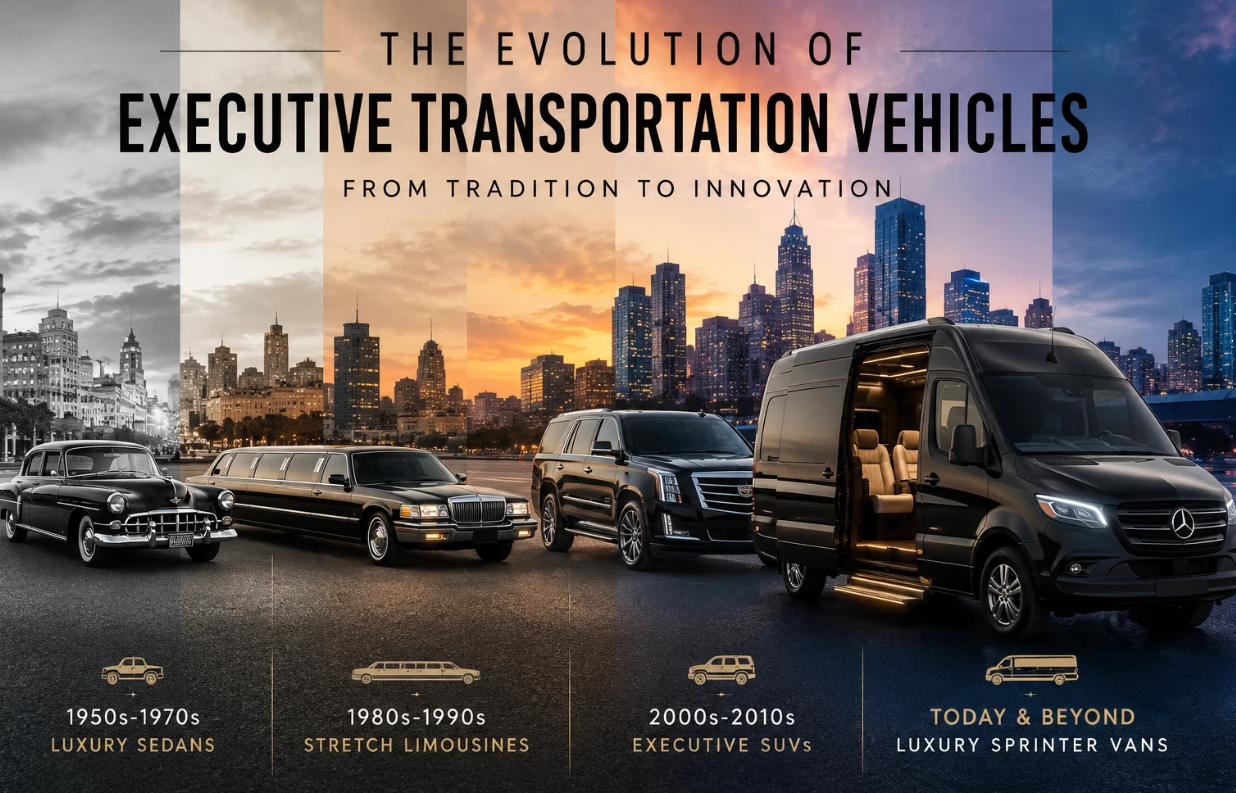
Business travel has changed dramatically over the last several decades. What once centered around traditional luxury sedans and stretch limousines has evolved into a far more versatile and experience-driven approach to executive mobility. Today, vehicles like the Luxury Mercedes Sprinter have become increasingly popular among executives, entrepreneurs, entertainers, corporate teams, and luxury travelers seeking a more refined, comfortable, and practical transportation experience.
Modern executive transportation is no longer simply about arriving at a destination. It is about productivity, privacy, flexibility, comfort, and creating a premium travel environment while on the road.
The Early Era of Executive Transportation
For many years, executive transportation was dominated by luxury sedans and chauffeur-driven limousines. Vehicles such as the Cadillac Fleetwood, Lincoln Town Car, and Mercedes-Benz S-Class became symbols of corporate success and professional prestige.
These vehicles were designed to provide smooth rides, quiet cabins, and a sense of sophistication for executives traveling between airports, hotels, offices, and business meetings. Stretch limousines later became popular for VIP transportation, corporate entertainment, and special events during the 1980s and 1990s.
At the time, luxury transportation focused heavily on image and exclusivity. Comfort remained important, but space and flexibility were often limited compared to what modern executive travelers expect today.
The Shift Toward Mobile Productivity
As business became increasingly global and technology-driven, executive transportation needs began to change. Professionals no longer viewed travel time as downtime. Instead, vehicles became extensions of offices and meeting spaces.
Modern executives required:
- Wi-Fi connectivity
- Conference seating
- Charging stations
- Privacy partitions
- Multimedia systems
- Comfortable long-distance travel accommodations
This shift transformed how luxury transportation vehicles were designed and utilized. Spacious interiors became far more valuable than traditional limousine styling alone.
Luxury business vans and executive conversions now commonly include mobile workspace layouts specifically engineered for professional travel.
Why Executive Vans Became So Popular
The rise of executive vans represented one of the biggest changes in luxury transportation history. Instead of prioritizing exterior size and stretched body designs, manufacturers and conversion companies began focusing on interior experience, versatility, and passenger comfort.
Executive vans quickly gained popularity because they offered:
- Easier entry and exit
- Upright seating positions
- More headroom
- Larger passenger capacity
- Flexible seating layouts
- Enhanced luggage space
- Better long-distance comfort
For executives traveling with assistants, clients, security personnel, or team members, traditional sedans simply could not match the usability of modern executive vans.
Vehicles built on the Mercedes-Benz Sprinter platform became especially influential in this transformation due to their combination of luxury, safety technology, interior customization potential, and smooth ride quality.
The Rise of the Mercedes-Benz Sprinter Platform
The Mercedes-Benz Sprinter became one of the most important platforms in the executive transportation industry because it blended commercial-grade reliability with luxury vehicle refinement.
Luxury transportation companies and custom conversion manufacturers began transforming Sprinter vans into high-end executive vehicles featuring:
- Reclining captain’s chairs
- Handcrafted wood interiors
- Ambient lighting
- Flat-screen entertainment systems
- Conference seating
- Advanced climate control
- Premium leather interiors
- Mobile office capabilities
Many luxury transportation operators now view executive Sprinter vans as the ideal alternative to traditional limousines because they provide a more comfortable and practical passenger experience.
Executive Transportation Today
Today’s executive transportation market serves a much broader audience than in previous decades. While corporate executives remain a major customer base, luxury transportation vehicles are also widely used for:
- Airport transportation
- Corporate roadshows
- Sports teams
- Entertainment industry travel
- Private family transportation
- VIP events
- Luxury tourism
- Group executive travel
Modern luxury transportation companies increasingly emphasize personalized service, onboard technology, passenger wellness, and seamless travel experiences. Concierge-style transportation services have become especially popular in major metropolitan markets.
The focus has shifted away from simply transporting passengers to creating an elevated travel environment that supports productivity, relaxation, and convenience.
Technology Continues to Shape the Industry
Technology has played a major role in the continued evolution of executive transportation vehicles. Features that were once considered luxury upgrades are now expected standards.
Many modern executive vehicles now offer:
- Real-time navigation systems
- Integrated Wi-Fi
- Smart entertainment controls
- Advanced driver assistance systems
- Privacy-focused interiors
- USB-C charging throughout cabins
- Remote work functionality
- Enhanced sound insulation
The growth of remote work and hybrid business travel has further increased demand for vehicles capable of functioning as mobile offices and collaborative workspaces.
Luxury vans now bridge the gap between business transportation and luxury travel in ways that traditional sedans and limousines often cannot.
The Future of Executive Transportation
The future of executive transportation will likely continue emphasizing flexibility, sustainability, and passenger experience. Electric luxury transportation vehicles, autonomous driving technology, and enhanced digital connectivity are already beginning to influence the next generation of executive mobility.
At the same time, spacious luxury vans and executive touring vehicles are expected to remain highly desirable because of their ability to combine:
- comfort
- versatility
- group transportation
- luxury amenities
- long-distance usability
As traveler expectations continue evolving, executive transportation vehicles will likely become even more personalized and experience-focused.
Final Thoughts
The evolution of executive transportation vehicles reflects broader changes in how people travel, work, and experience mobility. From classic chauffeur sedans to today’s sophisticated luxury Sprinter vans, the industry has continuously adapted to meet changing passenger expectations.
Modern executive transportation is no longer defined solely by appearance or exclusivity. Instead, it centers around comfort, productivity, flexibility, and delivering a premium travel experience that supports the needs of today’s professionals and luxury travelers alike.
