
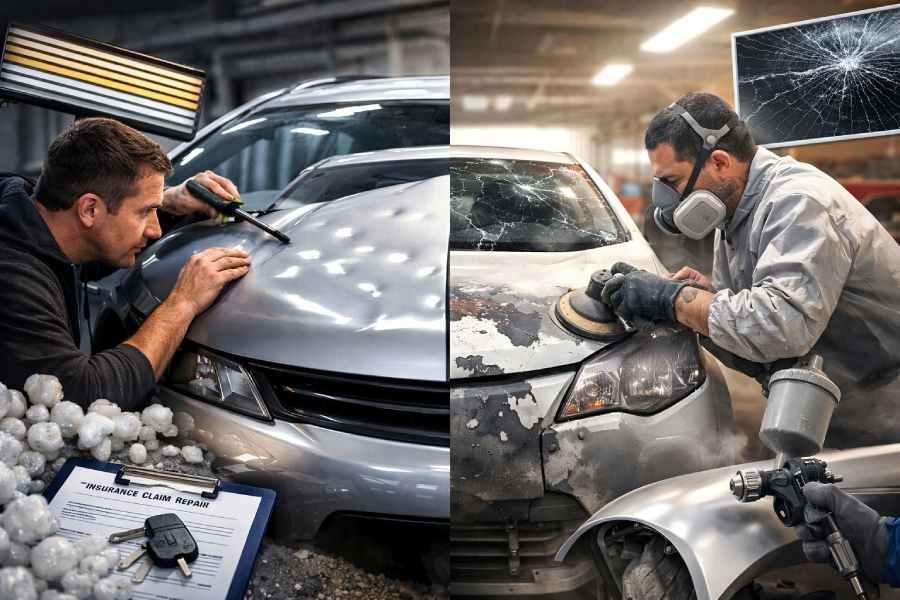
In areas like Houston, sudden hailstorms can leave vehicles covered with dozens or even hundreds of dents within minutes. When this happens, choosing the right hail damage repair method becomes essential for restoring the vehicle’s appearance, protecting its value, and managing repair costs. Two primary approaches are commonly used: Paintless Dent Repair (PDR) and conventional auto body repair. Each method serves a different purpose depending on factors such as paint condition, dent severity, and structural impact. Understanding how these repair techniques work helps vehicle owners make informed decisions about the most effective and cost-efficient hail damage repair Houston option after a storm
How Hail Damage Gets Repaired in Houston: PDR vs. Conventional Bodywork and When Each Makes Sense
Houston, TX sees severe hail storms that can pepper a vehicle with hundreds of dings in minutes. The right hail damage repair method depends on a thorough damage assessment, the severity of auto hail damage, and your goals for cost, turnaround time, and resale value.
When PDR (Paintless Dent Repair) Is the Right Choice
PDR (Paintless Dent Repair) is the industry standard in Houston for most hail damage repair because it preserves factory paint and often restores dents faster and more cost-effectively than repainting.
Ideal panel conditions
- Paint intact: If there’s no cracked or missing paint, PDR can massage the metal back to pre-storm condition without fillers.
- Access points: Trained technicians use specialized tools through factory openings to perform dent repair without drilling new holes.
- Steel and aluminum: Many late-model panels, including those on Tesla vehicles, can be eligible for PDR if the metal isn’t stretched.
Cost-effective factors and turnaround time
- Volume discounts: High-count auto hail damage typically prices favorably with PDR, especially when shops scale up repair services after a hail storm.
- Faster restoration: PDR reduces paint curing delays, improving turnaround time and getting you back on the road sooner.
- Insurance alignment: Most insurance claims prefer PDR when feasible, preserving OEM finishes and residual value.
When Conventional Repairs Make Sense
PDR isn’t the answer for every vehicle. Conventional repairs are appropriate when hail has caused structural distortion or paint failure.
Cracked paint, stretched metal, broken trim
- Paint failure: If chips or fractures are present, conventional auto body repair with refinishing is required.
- Stretched or sharp dents: Severe storm damage or body line creases may need filler, primer, and paint to achieve proper restoration.
- Broken moldings or glass: Hail can damage trim, roof rails, or glass; comprehensive repair work may blend collision repair processes with dent correction.
Blended Strategies and a Detailed Repair Plan
Many Houston repair experts mix both methods PDR for most panels and conventional bodywork where needed to deliver a seamless restoration.
Damage assessment checklist
- Panel-by-panel assessment under LED lighting and with state-of-the-art equipment
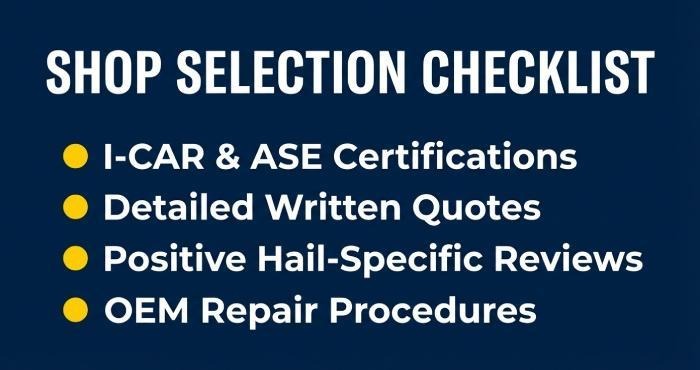
- Written estimate noting dent count, depth, and access strategy
- Documentation for insurance claims and a detailed repair plan with parts, labor, and expected timelines
Tip: Approving your repair plan
Ask for a line-item quote specifying PDR versus conventional repairs per panel, associated interior repair (headliner/trim R&I), and any paint blending. Clear scopes prevent surprises.
Where to Find Real Deals: Free Estimates, Price-Match Policies, Deductible Assistance, and Seasonal Specials
Savvy Houston drivers can keep hail damage repair affordable without cutting corners.
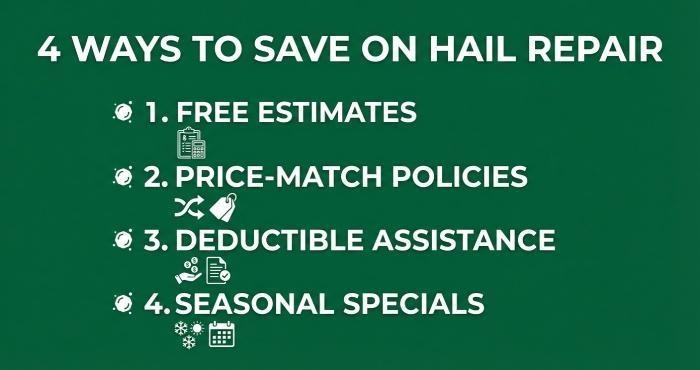
- Free estimates and quotes: Reputable shops provide no-obligation damage assessment and a written quote. Many will perform assessments in covered bays or via mobile scan tools for convenience.
- Price-match policies: Some repair shops, including network brands like CARSTAR and CARSTAR REV Collision, may consider price matching comparable repair work written to the same standard. Always compare apples to apples: PDR line items, parts quality, and warranty terms.
- Deductible assistance: It’s common after a major hail storm to see deductible help or rebate programs. Ensure any assistance is disclosed on your final invoice and approved by your insurer.
- Seasonal specials: In peak hail season, watch for limited-time offers on rental cars, tow services, or expedited scheduling. Follow local shops on YouTube or social feeds to catch promotions and before-and-after education that clarifies the process.
Local examples to explore include All-Pro Auto Reconditioning and Just A Dent for specialized auto reconditioning and dent repair, alongside national networks like CARSTAR that coordinate with Dealership Partners and may advertise a national warranty on qualified repair services. Always verify eligibility and terms.
Warranties That Matter: Lifetime PDR Coverage, Paint/Parts Guarantees, and How to Read the Fine Print
The best hail damage repair isn’t just about the day you pick up the vehicle; it’s about long-term confidence.
- Lifetime PDR coverage: Many shops back PDR against reappearance on the repaired area for as long as you own the vehicle. Confirm whether “lifetime” is owner-specific and if commercial or fleet vehicles are treated differently.
- Paint and parts guarantees: Conventional repairs should include a paint warranty against peeling and fading, plus parts coverage per OEM or aftermarket supplier terms. Ask whether aluminum panels and specialty finishes (e.g., Tesla multi-coats) have separate provisions.
- Transferability and networks: Some brands, like CARSTAR, promote a national warranty honored across participating locations. If you move out of Houston, this can be valuable.
How to read the fine print
- Exclusions: Hail recurrence, rust, and unrelated collision repair typically aren’t covered. Verify what happens if hidden damage is found after disassembly.
- Claims process: Know who administers warranty claims—the local repair shop, a network center, or a parent organization (e.g., HMS Holdings, LLC for certain affiliated entities).
- Documentation: Keep your original estimate, photos from the damage assessment, and final invoice. These accelerate any warranty evaluation.
Mobile Repair Options Across Greater Houston: Coverage Areas, Setup Requirements, Turnaround, and Safety
Mobile hail damage repair brings technicians to you useful across Greater Houston, from The Woodlands and Katy to Pearland and Baytown.
Coverage areas and partners
- Many teams stage near dealerships and large employers after a hail storm, sometimes coordinated with carriers or catastrophe vendors like Nexterra to streamline insurance claims.
- Ask if mobile crews are factory-certified for specific makes or advanced materials; aluminum and EVs often require specialized tooling and battery safety protocols.
Setup and safety requirements
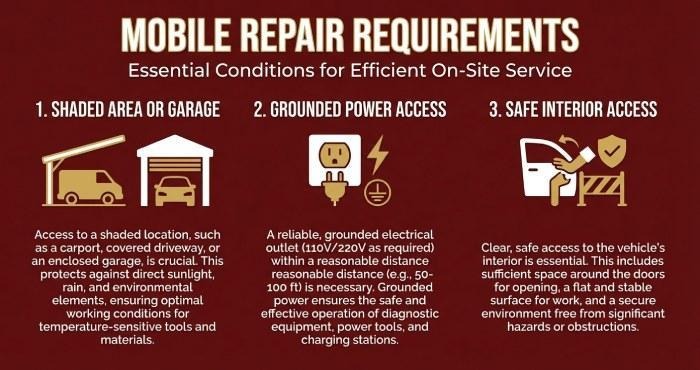
- Space and shelter: A garage or shaded area improves visibility and accuracy during paintless dent repair. Some crews bring pop-up bays and state-of-the-art equipment lighting.
- Interior access: PDR often requires temporary interior repair steps removing the headliner, trim, or tail-lamps to access dents. Ensure technicians protect upholstery and electronics.
- Power and protection: Confirm grounded power needs, panel temperature controls, and safe EV handling. Reputable teams use fender covers and panel guards to prevent secondary damage.
Turnaround time expectations
- Light-to-moderate auto hail damage can be completed same-day or within 48 hours via mobile PDR. Mixed-method jobs may require shop time for conventional repairs and paint curing.
- Request an ETA window and ask how weather or parts availability could affect restoration.
Safety note
- Quality mobile providers are insured, background-checked, and transparent. If anything feels rushed or tools seem improvised, consider directing the vehicle to a controlled repair shop environment instead.
Navigating Insurance and Choosing a Shop: Certifications, Reviews, Timelines, Red Flags, and a Quick Checklist
Insurance and shop selection can make or break your experience in Houston.
Certifications and expertise
- Look for I-CAR, ASE, and OEM approvals, especially for advanced materials and Advanced Driver Assistance Systems(ADAS) equipped vehicles. Trained technicians should demonstrate PDR mastery and conventional repairs competency.
- Ask about experience with high-visibility programs and motorsports-grade standards—organizations like Hendrick Motorsports hold exacting body and paint benchmarks; while your car isn’t the No. 24 Chevrolet, quality systems inspired by elite racing can benefit everyday car repair.
Reviews, transparency, and customer service
- Read recent Houston reviews focused on hail damage repair, not just collision repair. Prioritize notes on communication, customer service, and adherence to the detailed repair plan.
- Request progress photos or short video updates; some shops host galleries or process explainers on YouTube or platforms built by providers like Eversite, helping you understand each assessment step.
Timelines and red flags
- Typical flow: Intake and damage assessment, insurer approval, PDR and/or conventional repairs, quality control, final inspection, and delivery.
- Red flags: Vague estimates, reluctance to provide a written repair plan, no mention of warranty terms, or pressure to skip necessary restoration steps.’
Quick checklist to get you back on the road
- Get at least two written quotes with a clear PDR vs. conventional breakdown.
- Confirm trained technicians, proper tooling, and state-of-the-art equipment for both steel and aluminum.
- Verify warranty terms (lifetime PDR where applicable, paint/parts details, national warranty eligibility).
- Ensure rental cars and tow services are available if your vehicle must stay at the shop.
- Ask about deductible assistance and price-match policies in writing.
- For EVs and specialty models (e.g., Tesla), confirm OEM procedures and battery safety protocols.
- If in doubt, contact us for a second assessment and a revised, detailed repair plan that specifies how we’ll restore dents and return the vehicle to pre-storm condition.
Whether you choose a mobile team or a brick-and-mortar repair shop, the right mix of thorough damage assessment, disciplined dent repair techniques, and accountable warranties will deliver a lasting restoration for auto hail damage in Houston.
