
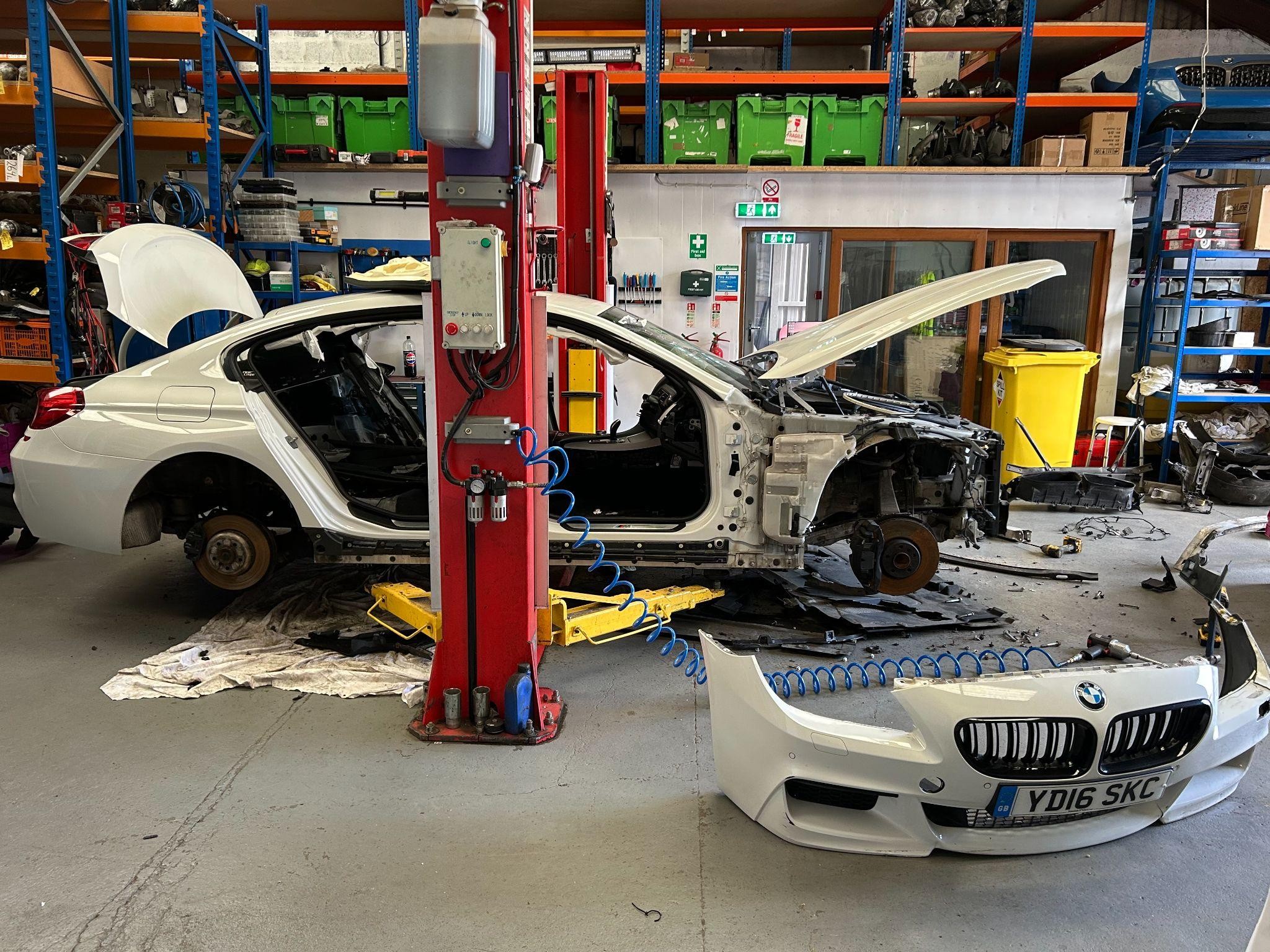
Roughly four to five million vehicles reach the end of their working lives in the UK every year. Some are auctioned after accidents. Others are handed in when repairs become uneconomical. A few are simply old, worn out, and no longer worth taxing or insuring. Before any of these cars reaches a crusher, someone makes a decision: which parts still have a useful life in them?
That decision is what car breakers, sometimes also called car dismantlers, exist to make. And increasingly, it turns out that decision is economically sound for vehicle owners on the other end of the transaction too.
What Car Breakers Actually Do
The term covers a wide range of businesses, from informal backyard operations to large, professionally run dismantling facilities that handle hundreds of vehicles a month. What they have in common is the core activity: acquiring vehicles that are no longer roadworthy as a whole, extracting components that still function correctly, and reselling them.
Modern car dismantlers don’t simply strip a car and pile the results in a corner. At professional facilities, each vehicle is depolluted first, before any mechanical disassembly begins. Parts are then inspected, often tested, photographed, and catalogued against the specific vehicle they came from. By the time a used alternator, a door mirror assembly, or a complete engine reaches a buyer, a competent dismantler will have verified that it functions correctly and recorded its mileage.
This is a significant shift from the trade’s older image. Digital inventory systems, high-resolution part photography, and logistics networks that reach buyers across the country have changed what was once a local, face-to-face trade into something much closer to conventional e-commerce, with the difference that the stock consists of components recovered from real vehicles rather than manufactured to order.
The Economics: Is a Used Part Actually Cheaper?
For most mechanical and body components, yes, substantially. A used genuine part sourced from a car dismantler typically sells for 50 to 80 per cent less than the same component bought new from a manufacturer or main dealer. The saving is largest on parts that are expensive new but degrade slowly in normal use: engines, automatic gearboxes, structural body panels, lighting assemblies, interior trim, and electronic modules.
Used parts aren’t always the best choice. We wouldn’t recommend buying brake pads, discs, belts, filters or other routine service items from a car dismantler. These parts wear out with use, and you rarely know how much life they have left. In most cases, you’re better off buying these items new rather than risking a short-lived replacement.
For the components that sit between those two categories, parts with wear, but functional wear remaining, the value equation depends on how clearly a seller discloses what they’re offering. Donor vehicle mileage, inspection records, and an honest description of condition are what turn a used part from a gamble into a calculation.
A used genuine part from a professional dismantler typically costs 50 to 90 per cent less than the same component bought new. The saving is largest on parts that degrade slowly in normal use.
BMW, Mercedes and other Specialised Breakers: Why Marque Specialism Matters
Not all car dismantlers work the same way, and the distinction between a general breaker and a marque specialist is meaningful, particularly for premium European cars.
BMW, Mercedes-Benz, and Audi vehicles are engineered to tighter tolerances than the average car and carry more software-governed components. A BMW’s ABS module, adaptive suspension dampers, or iDrive control unit doesn’t simply connect and operate when fitted from a donor vehicle; it may need to be coded to the new car’s VIN through dedicated diagnostic software. A Mercedes may behave differently depending on whether a replacement electronic component came from a car fitted with the same options. These nuances require knowledge that a general dismantler handling fifty different makes often won’t have.
A specialist car breakers yard operation, one that exclusively focuses on a single manufacturer’s vehicles, tends to be better placed to match a part to a specific variant, explain whether coding is required, confirm that a component is compatible with a car’s build date and option list, and catch the differences between, say, a pre-facelift and post-facelift part that look identical on a listing but are not interchangeable in practice.
MT Auto Parts (mtautoparts.com), a BMW dismantler in South Yorkshire, is one example of how this level of specialism operates, focusing on F, G, and U generation models exclusively and stocking parts across every major category from engines to electrics.
For owners of German prestige cars, the case for using a specialist dismantler rather than a generalist one goes beyond price. It goes to whether the part that arrives will actually work in your specific car.
What Car Breakers Are Good For, and What They’re Not
Car dismantlers perform well for a specific kind of buying decision: a part that is expensive new, wears slowly, and needs to be genuine or original-specification to function correctly. Structural body panels that must match exact geometry. Gearboxes from a low-mileage donor vehicle that will outlast a newly manufactured replacement. Electronic modules that carry the correct calibration for the platform they came from.
They are a less obvious choice for safety-critical consumables that degrade whether used or not: tyres beyond a certain age, brake components past service life, airbag propellant charges. Responsible car dismantlers decline to sell these precisely because condition at dismantling doesn’t reliably predict condition years later when the component may be called on.
There’s also a practical constraint around availability. A car dismantler can only sell what’s come through their gate. High-demand components on popular models are usually well-stocked. Rare parts for low-volume models or early production variants may not be available, may have already been sold, or may require waiting for the right donor vehicle to arrive.
How the Environmental Calculation Works
There’s a dimension to car breakers that doesn’t come up in a price comparison but is worth understanding: the avoided manufacturing cost.
Every new component manufactured requires raw materials, energy, and industrial processes. A cast aluminium subframe, a pressed steel body panel, a glass headlight lens, all of these have a carbon and material cost attached to their production. When a serviceable version of the same component is recovered from an end-of-life vehicle and refitted into a running one, that manufacturing cost is avoided entirely for this service life of the part.
The UK’s vehicle recycling system, governed by the End-of-Life Vehicles Regulations, targets a 95 per cent combined recovery rate by weight for each vehicle processed. Reusable parts sold through dismantlers contribute to that figure directly. It’s not a marginal environmental benefit: a gearbox weighing 60 kg that is refitted rather than melted down and recast represents a material difference in terms of energy and emissions avoided.
For manufacturers that have made sustainability commitments, the case for using recovered original parts, rather than newly manufactured replacements, aligns more closely with those commitments than buying new aftermarket alternatives. The component already exists. It just needs to go into the right car.
The Practical Verdict
Car breakers are worth it under the right conditions. The conditions are: the part is mechanical or structural rather than a consumable, the dismantler is properly licensed and can demonstrate how they’ve assessed the part’s condition, you’ve confirmed fitment against your specific vehicle’s details, and you understand the warranty terms before anything is fitted.
Where those conditions are met, particularly through a specialist dismantler who knows the brand, the cost saving is real, the parts are typically genuine, and the environmental outcome is better than buying new. The cases where car breakers disappoint usually trace back to a shortcut taken in one of those conditions: a part bought without confirming fitment, from a seller who couldn’t explain what the vehicle’s history was.
Done properly, the used parts trade isn’t a compromise. It’s the more rational option.
